

Every home tells a story—how a family lives, what they value, and how they gather. But sometimes the layout of a home doesn’t support the life unfolding inside it. That was exactly the case with this full first-floor redesign I recently completed. The home was extremely traditional, the rooms were compartmentalized, and the flow made it difficult for guests to connect or even see each other when they were visiting.
From the moment I walked in, I knew the bones were beautiful—but the layout and finishes were fighting against it. My goal was simple: honor the traditional charm while creating a bright, cohesive, and functional space that invited gathering and connection.
Identifying the Problems: A Disconnected, Confined Space
The original layout presented several challenges:
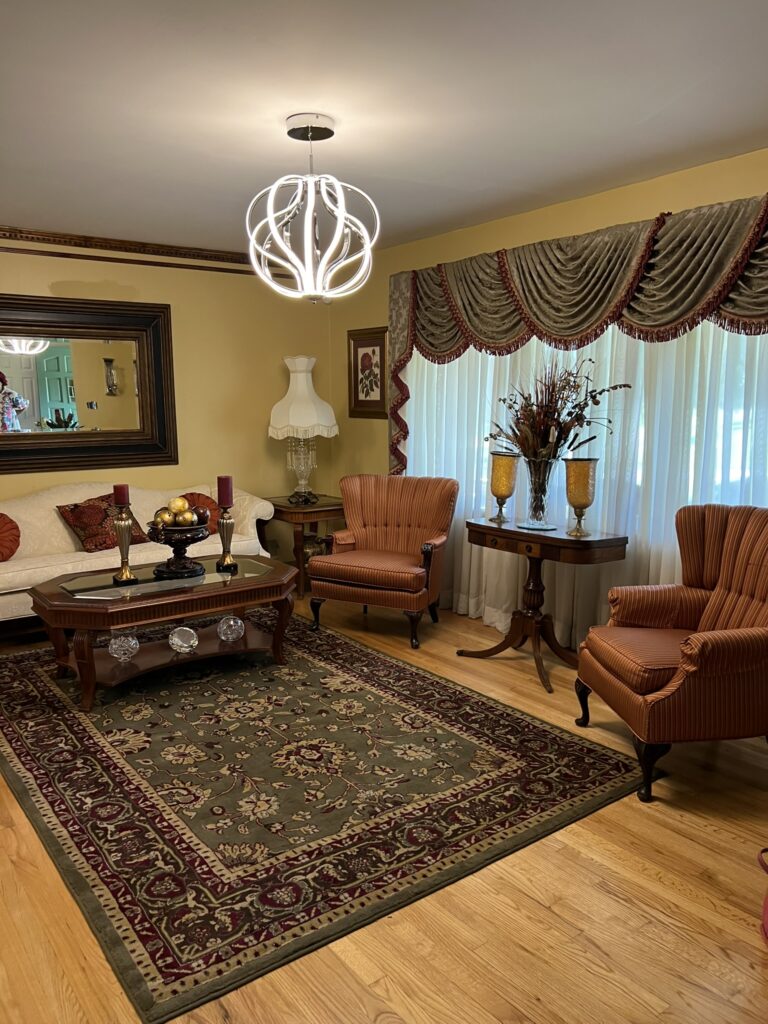
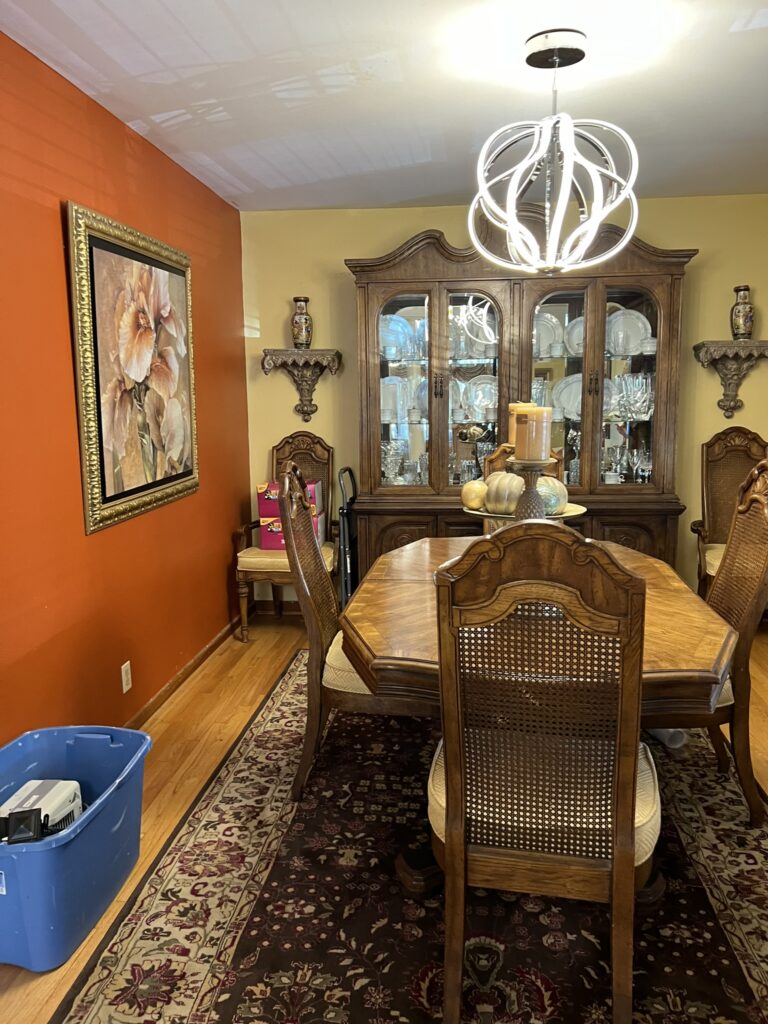
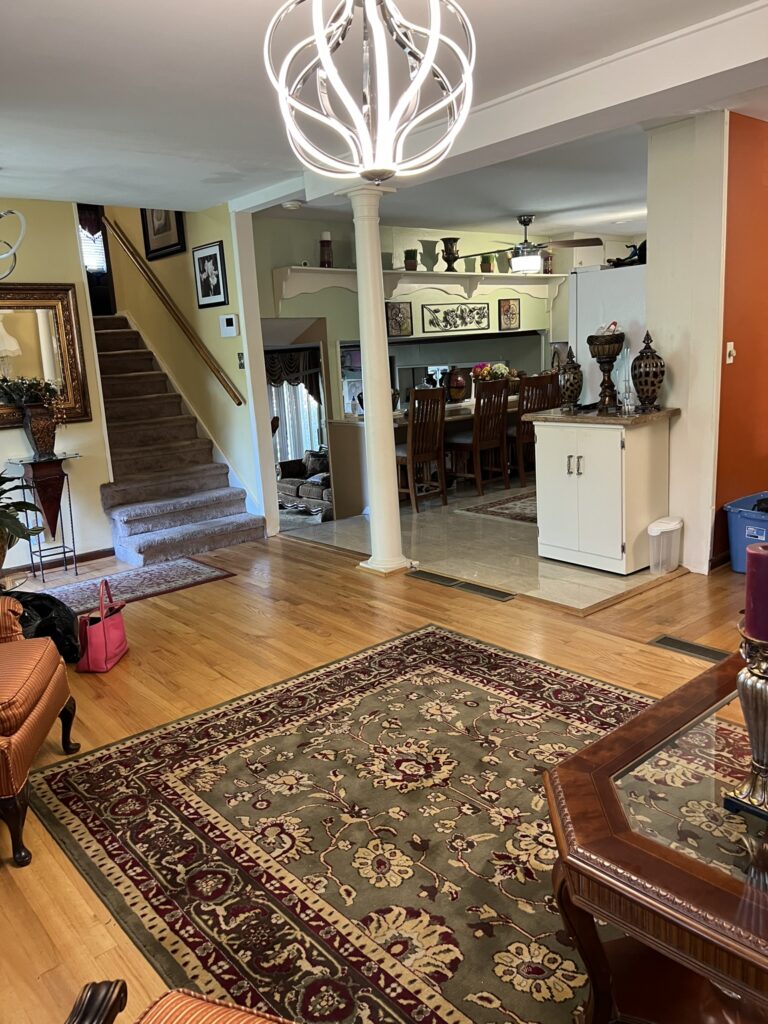
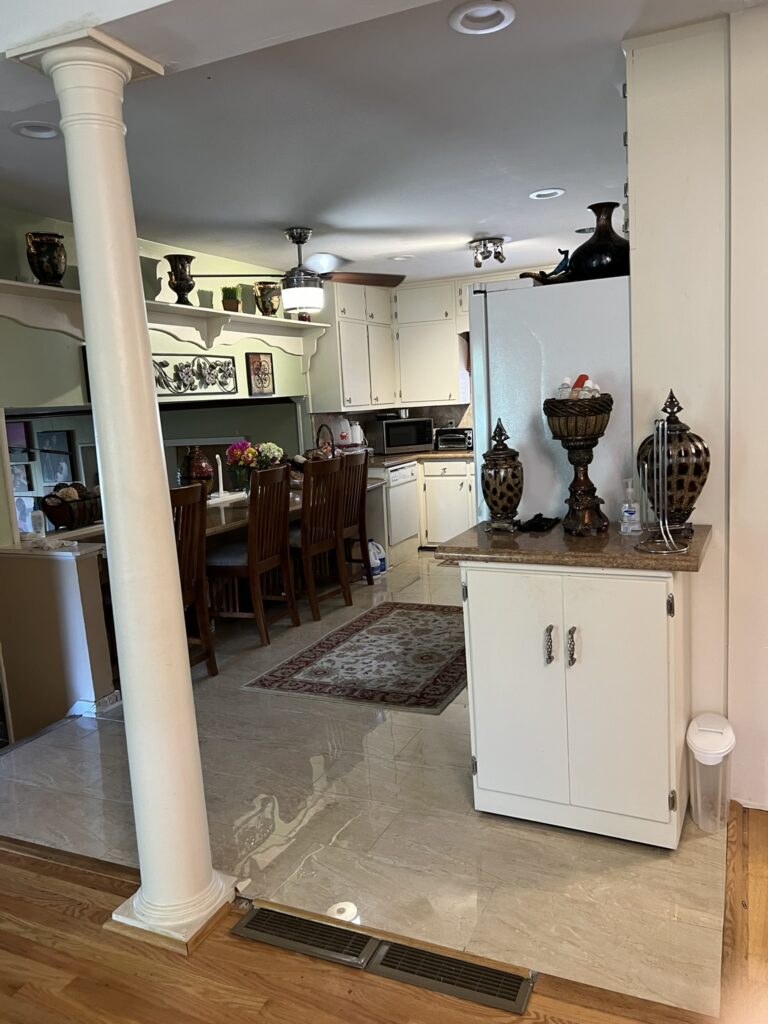
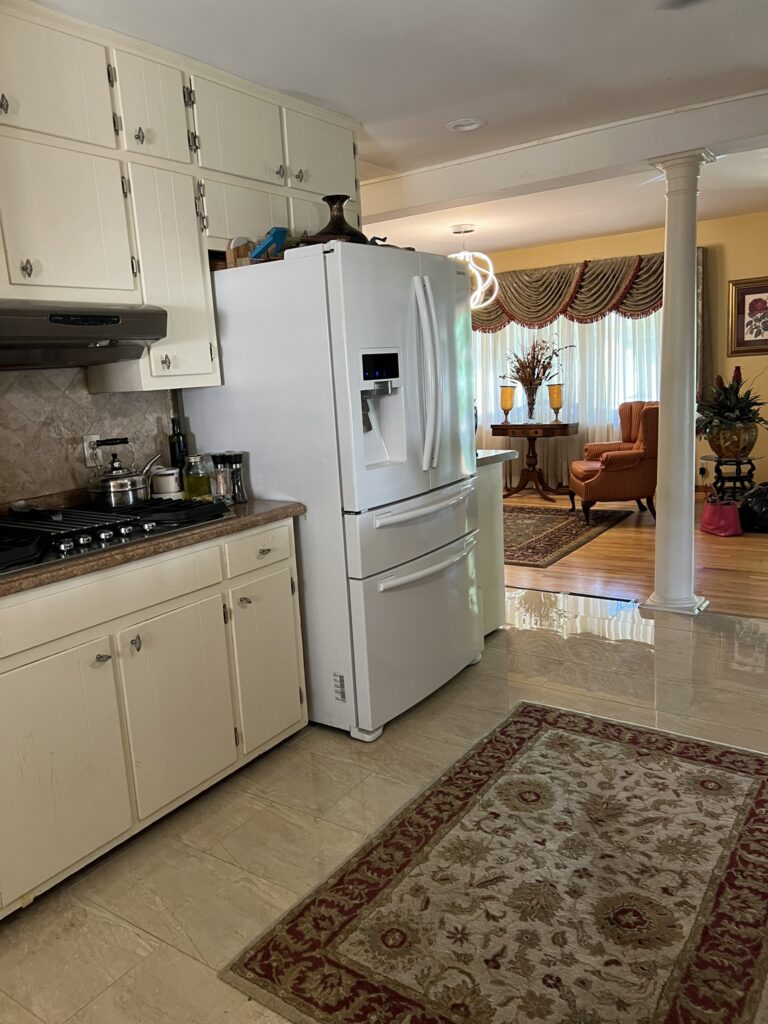
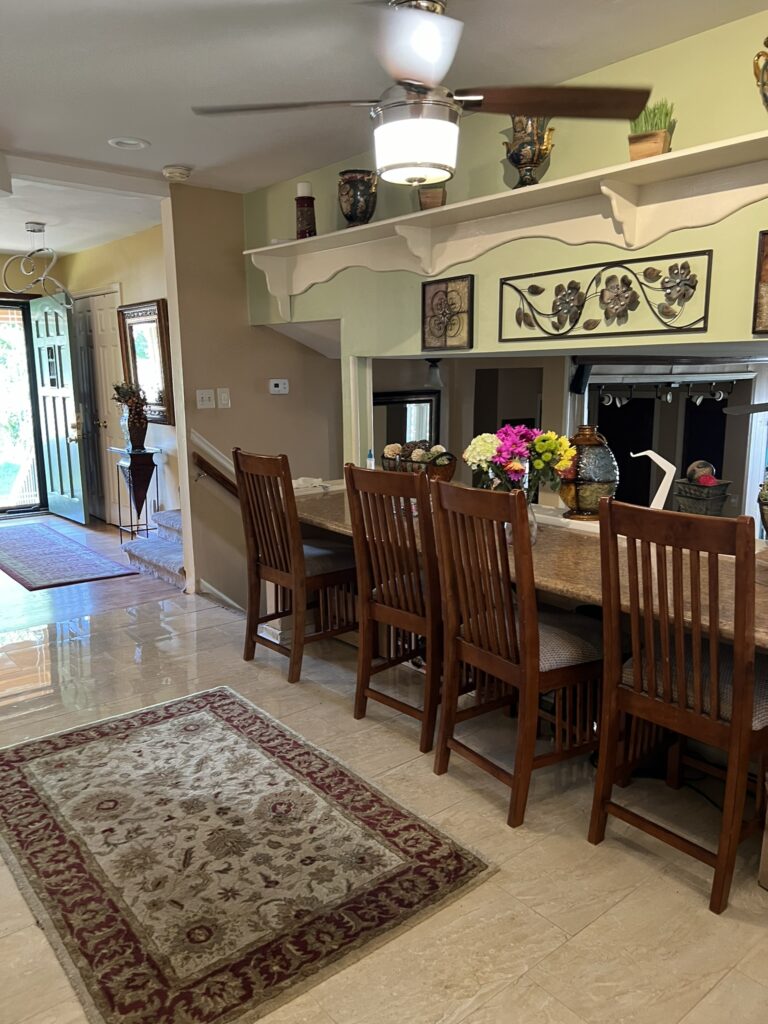
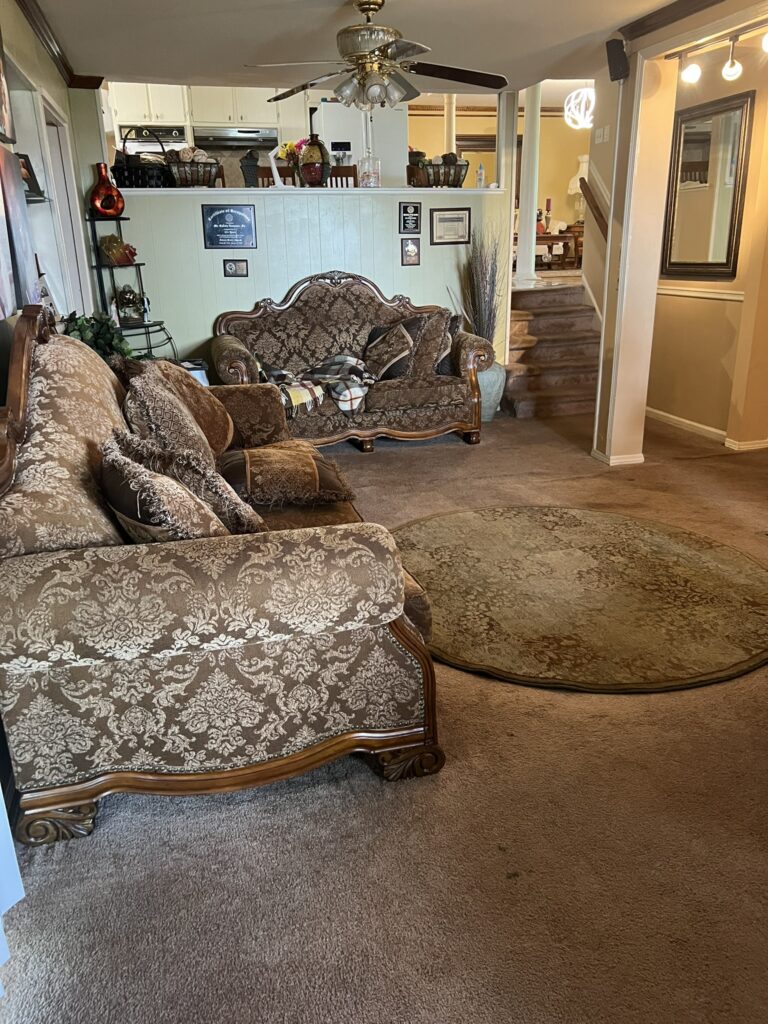
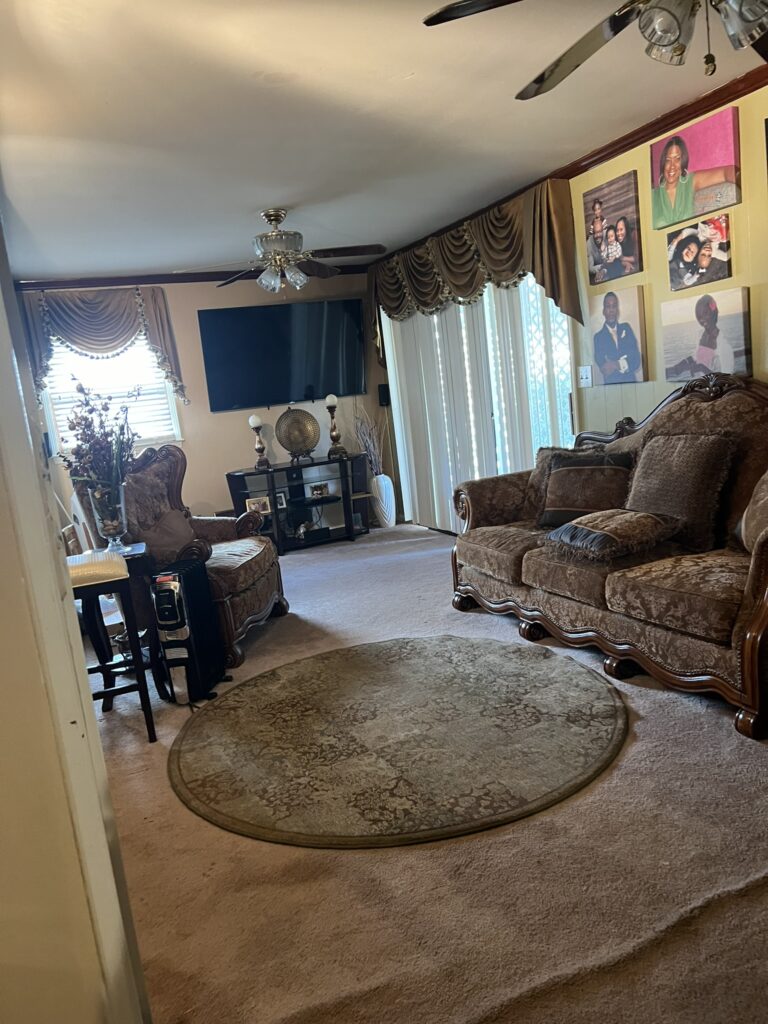
Individually, these issues were inconveniences. Together, they created a space that felt cramped, disjointed, and anything but welcoming.
My Vision: Open Sightlines, Unified Style, and Purposeful Flow
The first major step was rethinking the entire layout for better functionality and connection.
1. Removing Walls and Creating an Open Concept
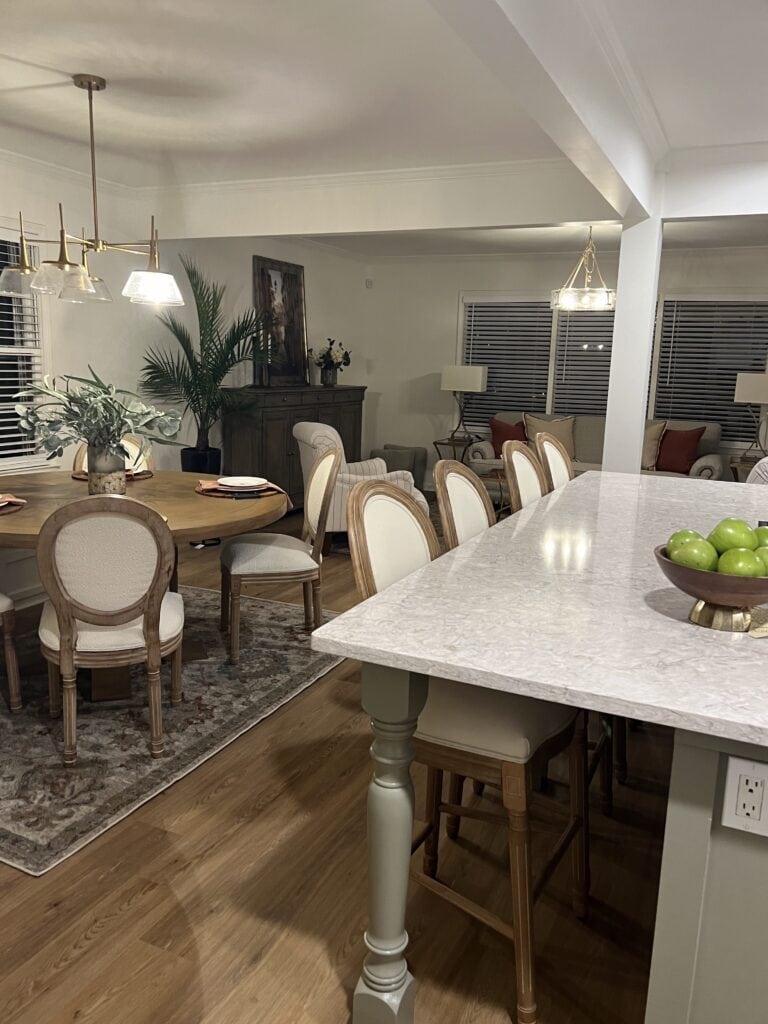
I removed the wall dividing the kitchen and dining room and addressed two structural columns—eliminating one and supporting the space with an LVL beam. This immediately opened the first floor, allowing natural light to move freely and guests to interact effortlessly across rooms.
2. Repositioning the Exterior Door
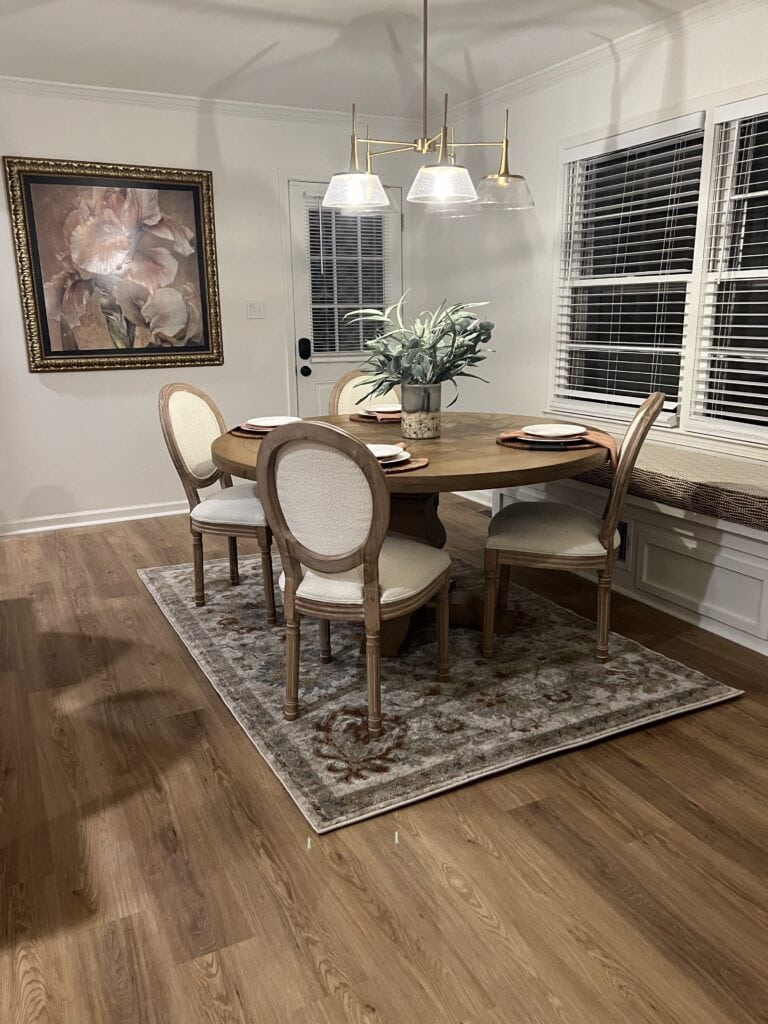
The back door that was awkwardly wedged behind cabinetry was relocated to the corner of the dining room. This simple change made the entire kitchen footprint more usable and allowed me to maximize the cabinetry and countertop layout.
3. Closing the Den Pass-Through
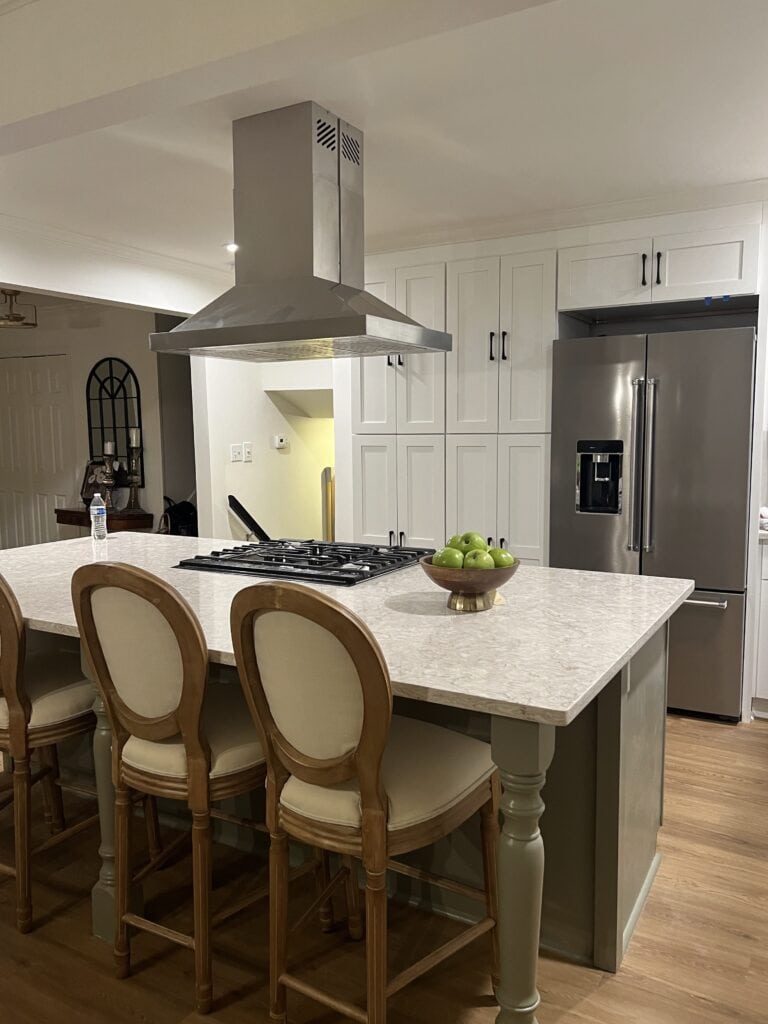
The “lookout” opening into the den didn’t serve the kitchen or the den. By closing it off, I created space for:
- Two large pantries
- A new home for the refrigerator
- Expanded countertop space
- A lazy Susan for small appliances
This instantly reduced counter clutter and dramatically improved storage.
4. A Functional, Social Kitchen Layout
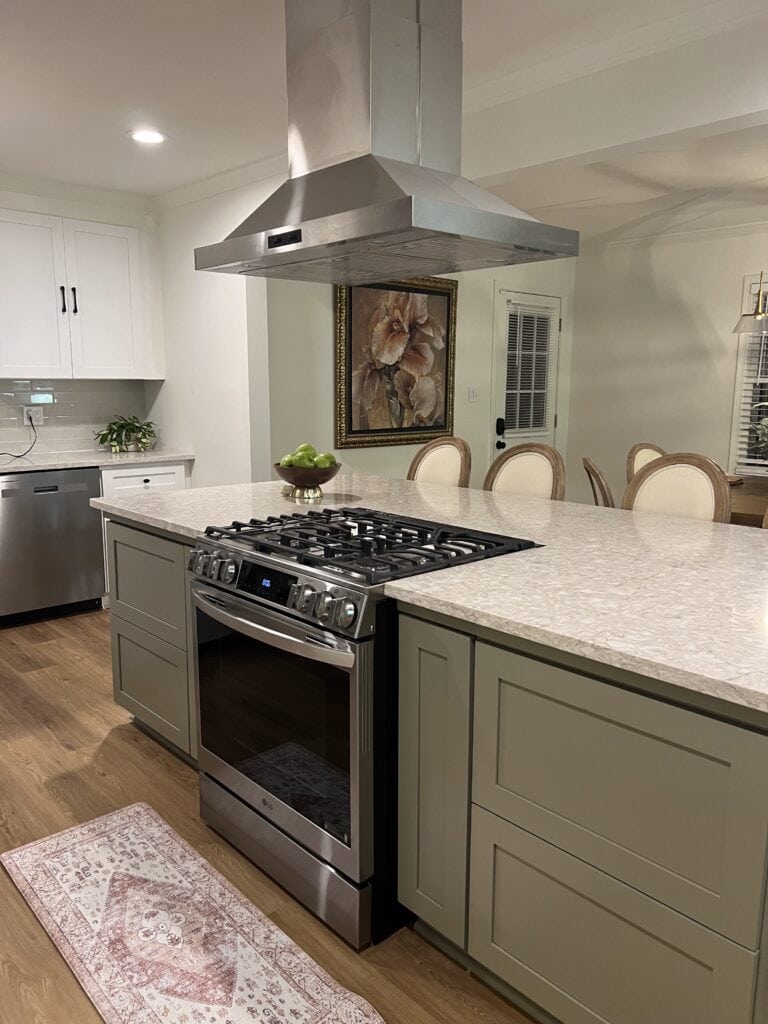
I added a new island with seating and placed a slide-in oven/stove there, paired with a ceiling-mounted vent hood. This gave the kitchen a stunning focal point without blocking views into the dining area. A built-in dining bench under the window tied the spaces together and created an inviting spot for meals or morning coffee.
Design Aesthetic: Blending Traditional and Transitional
- I replaced deep reds and greens with soft whites, creams, and sage green, anchored by warm accents of rust.
- I swapped mismatched flooring for a continuous light-toned LVP, giving the first floor a seamless, cohesive look.
- All lighting was updated to glass and brushed gold, blending timeless elegance with modern simplicity.
- Light wood furnishings and cream upholstery introduced warmth without heaviness.
- Subtle textures and patterns added dimension while keeping the overall palette calm and airy.
- I removed heavy draperies and added wood blinds, allowing natural light to brighten every corner.
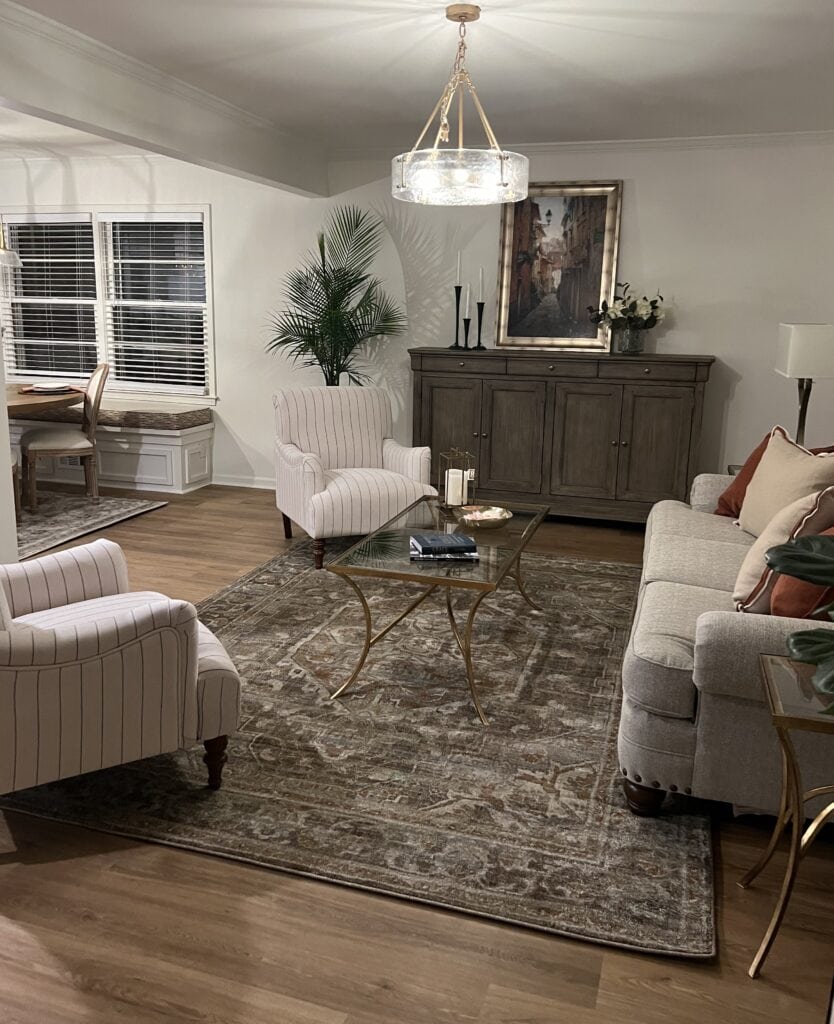
The client wanted to keep some traditional character but move toward a more updated transitional feel. To achieve this:
Area rugs with slightly deeper tones were used to define the dining and living spaces, ensuring each area felt intentional and grounded—even within the open concept.
The Den: A Long, Narrow Challenge Solved With Purposeful Zones
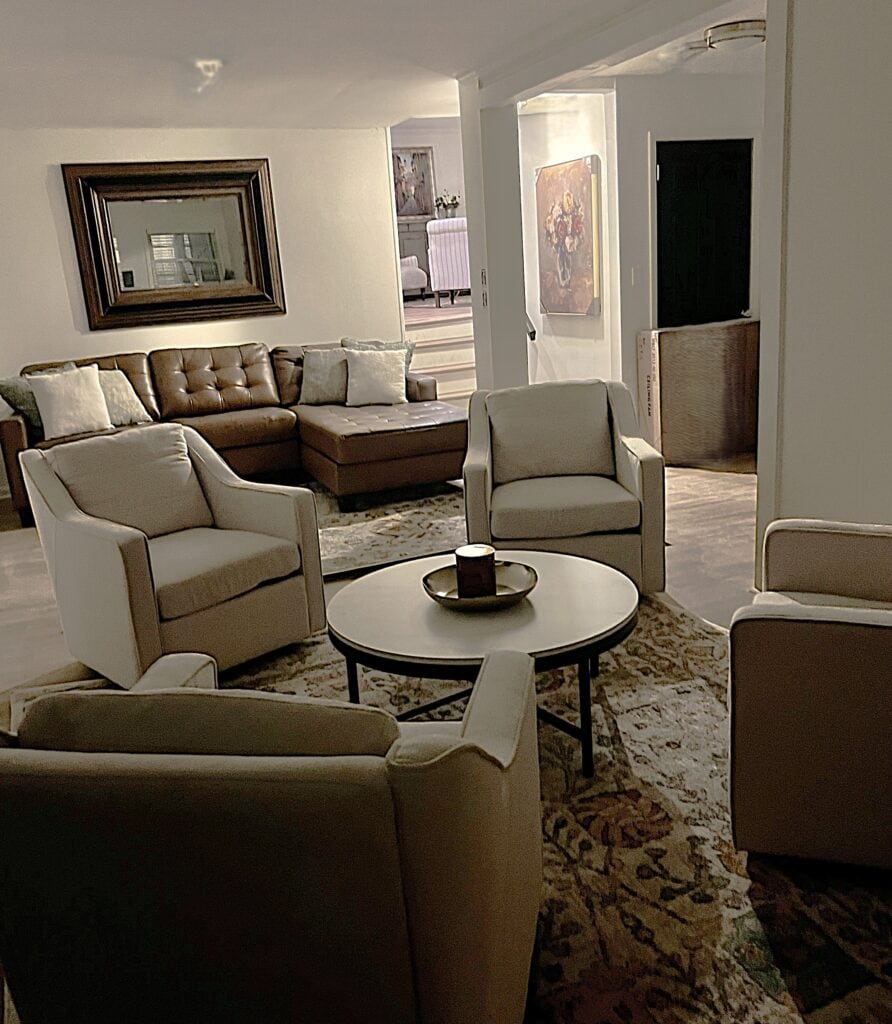
Although the den sat a few steps down from the main level, it was still fully visible from upstairs and needed to feel connected to the overall design.
The space was long and narrow with very oversized traditional furniture and a TV placed nearly 20 feet from the seating area. It simply wasn’t functional.
I reimagined the space using two distinct zones:
Zone 1: TV + Relaxation
- A sleek leather sectional
- A console for storage and styling
- Better-scaled furniture that suited the long shape
Zone 2: Conversation + Games
- Four swivel chairs
- A central coffee table
- A space designed to bring people together
The same color palette flowed downstairs, tying every level of the home together beautifully.
Carrying the LVP down the stairs and into the den eliminated the choppy transitions and created a visual connection from top to bottom.
The Reveal: An HGTV Moment I’ll Never Forget
Once construction was complete, I styled the entire space while the client was away—what I lovingly call my HGTV moment.
When she walked in, she immediately burst into tears. Happy tears. Shocked tears. Tears that said:
“I can’t believe how beautiful this is… I can’t believe you did this.”
Those moments are why I do what I do.
Seeing someone fall in love with their home again is the greatest payment for my work.
And the best part? She was so thrilled that six months later, she asked me to redesign her upstairs too.
A Home Reborn
This transformation wasn’t just about removing walls or choosing pretty fixtures. It was about creating:
- Purposeful flow
- Spaces that invite connection
- Rooms that feel cohesive and intentional
- A home that finally matched the way the family lived
The result is a first floor that feels bright, open, warm, and beautifully unified—a space that truly functions for gatherings, family life, and everyday joy.
If you’re dreaming about transforming your home—whether it’s one room or the entire floor—I’d love to help you reimagine it.

